Coral Bleaching Explained: What Divers Are Really Seeing on the Reef
When the reef turns white, it is not yet dead — but it is sending a desperate signal. Understand the science, the timing and what divers can do about it.
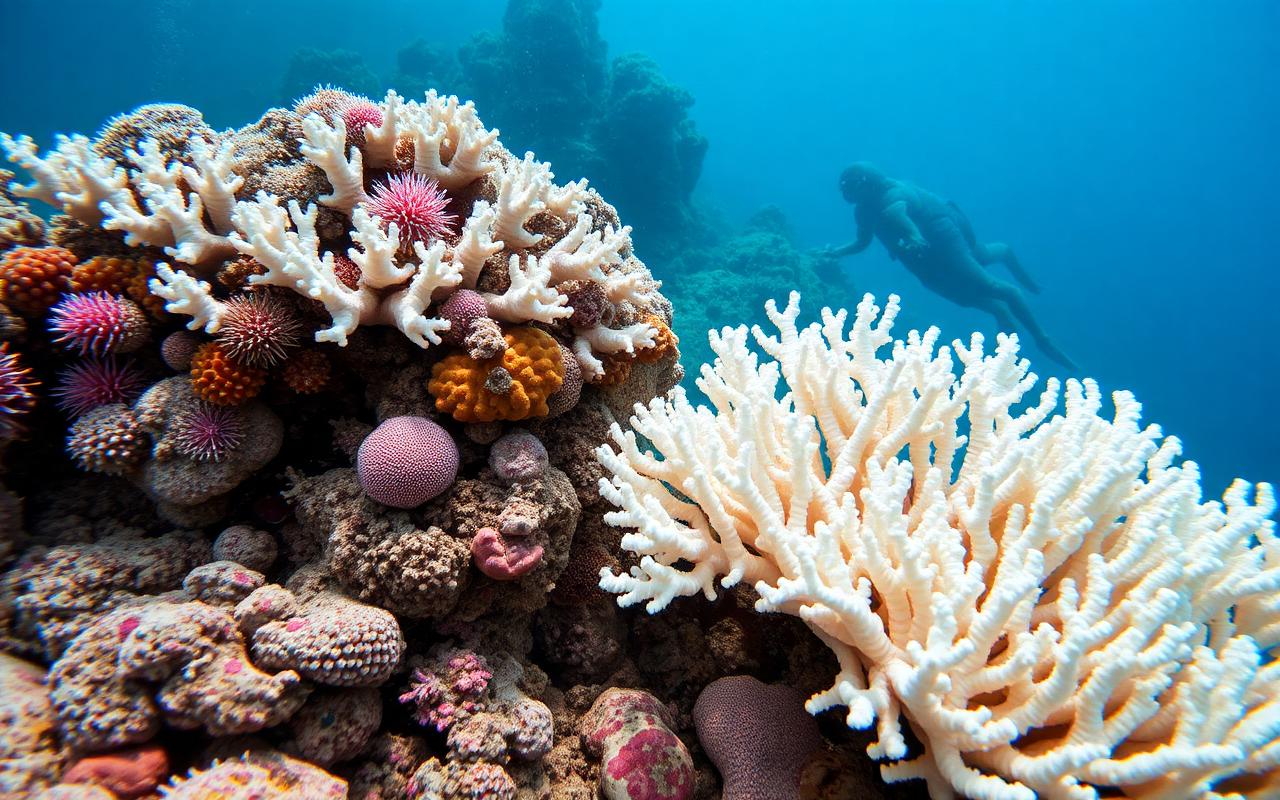
If you have dived in Asia in the last five years, you have almost certainly seen it: an unusually white branch, a ghostly table coral, a whole patch of reef glowing pale in the blue. That is coral bleaching, and it is the single greatest threat to the reefs we love.
What is coral bleaching, exactly?
Coral animals (polyps) live in symbiosis with microscopic algae called zooxanthellae. The algae photosynthesise inside the coral, providing up to 90% of its energy and most of its colour. When seawater warms by even 1–2 °C above the long-term summer maximum for several weeks, the corals expel the algae as a stress response.
The white you see is the calcium-carbonate skeleton showing through transparent tissue. The coral is alive — but starving. If conditions return to normal within 4–6 weeks, the algae can recolonise and the coral recovers. If not, it dies and is rapidly overgrown by turf algae.
Bleaching events in Asia
The Coral Triangle — Indonesia, Philippines, Malaysia, East Timor, PNG, Solomon Islands — has experienced major bleaching events in 1998, 2010, 2016 and 2024. The Maldives lost up to 60% of shallow-water coral cover in 2016. Thailand’s Andaman Sea closed several dive sites in 2010 to allow recovery.
Reef recovery in Asia has been remarkably resilient compared with the Caribbean — but each event raises the baseline temperature corals must adapt to.
What divers can actually do
We are not powerless. Diver behaviour, choice of operator and citizen-science participation make a measurable difference.
- Use mineral-only sunscreen (zinc oxide, no oxybenzone, no octinoxate).
- Choose dive operators with mooring buoys — anchor damage compounds bleaching stress.
- Report bleaching to platforms like CoralWatch or Reef Check during your trip.
- Avoid reef-fish feeding and any contact with coral.
- Offset your flights and ask your dive operator about their reef-restoration partners.
Reasons for cautious hope
Some reefs in Raja Ampat, the Coral Triangle and the Tubbataha Reefs Natural Park have shown unusual heat resistance — possibly because of strong upwelling, oceanographic mixing and decades of strict protection. Marine Protected Areas with active enforcement consistently outperform unprotected reefs in recovery rates.
These places exist because divers — including those who came before us — fought for them. Continuing to dive ethically, and supporting operators who fund conservation, is part of how the next generation will still find living reefs.
Ready to dive Marine Life?
Let our experts design a custom itinerary tailored to your level and bucket list.
Create my dive tripFrequently asked questions
Is a bleached reef worth visiting?+
Yes — fish life often persists, and witnessing bleaching first-hand is a powerful conservation experience. Just dive with extra care.
Can bleached coral recover?+
Yes, if the heat stress is short. Recovery takes months for soft corals and many years for slow-growing hard corals.
What sunscreen should I bring?+
Mineral (non-nano zinc oxide) sunscreens labelled reef-safe. Better still: a UPF 50+ rash guard and leggings.